

Summary
Stablecoins are a superior technology for dollar based transactions
Rapid adoption is underway, supported by regulatory clarity
Stablecoins drive substantial fees to Ethereum, enhancing its investment case
[four minute read]
Introduction
A dollar stablecoin is a cryptocurrency pegged to the U.S. dollar and designed to maintain a 1:1 value.
Each individual stablecoin is fully reserved—backed by a dollar deposited at a bank.
When in this digital form, stablecoins can be transacted through internet‑native payment rails like Ethereum—fast, frictionless, inexpensive, and without middlemen.
The use of stablecoins is expanding rapidly.
Because stablecoins offer clear advantages over today’s electronic dollars, they are poised to become the dominant medium for dollar-based transactions.
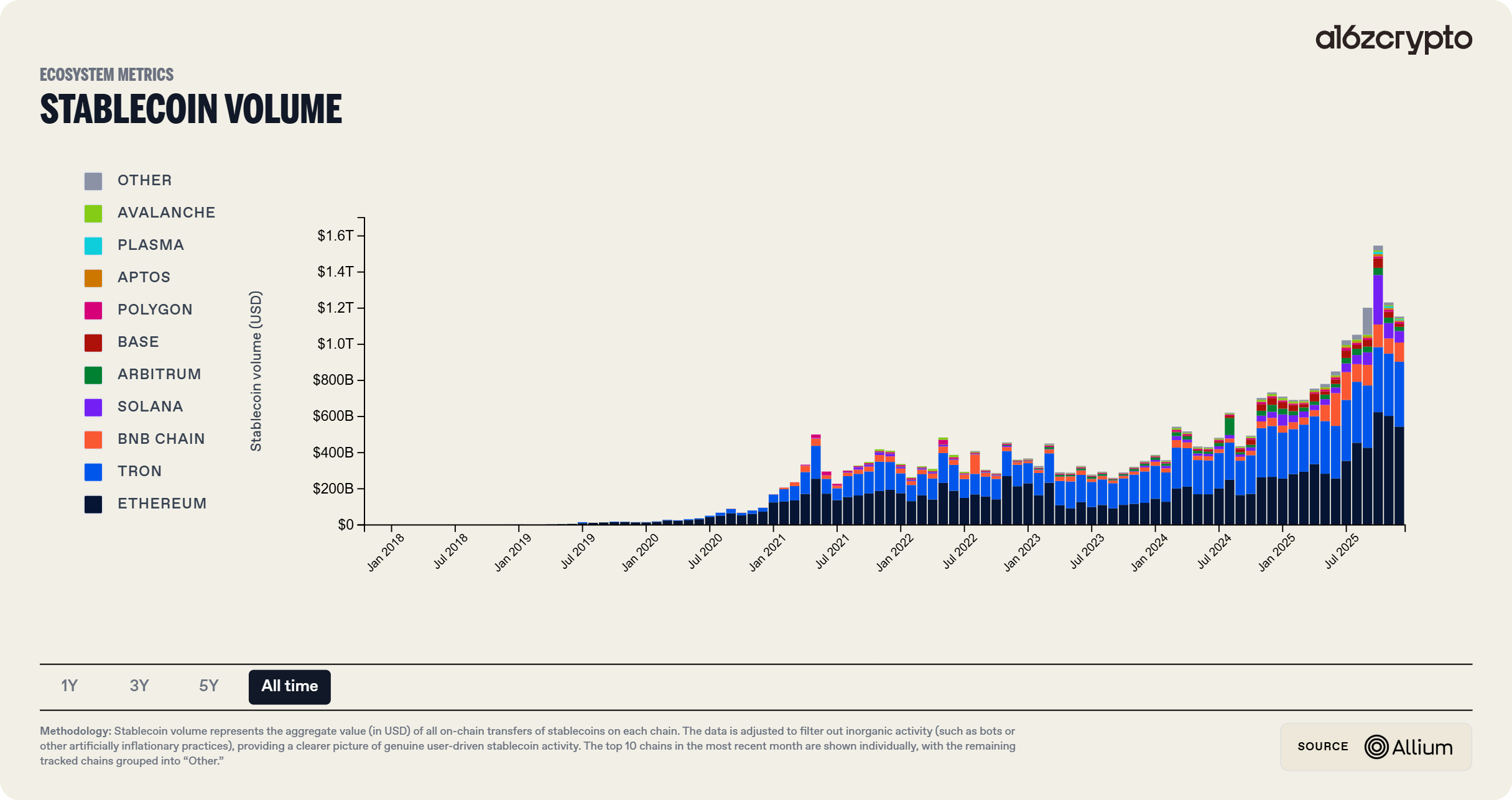
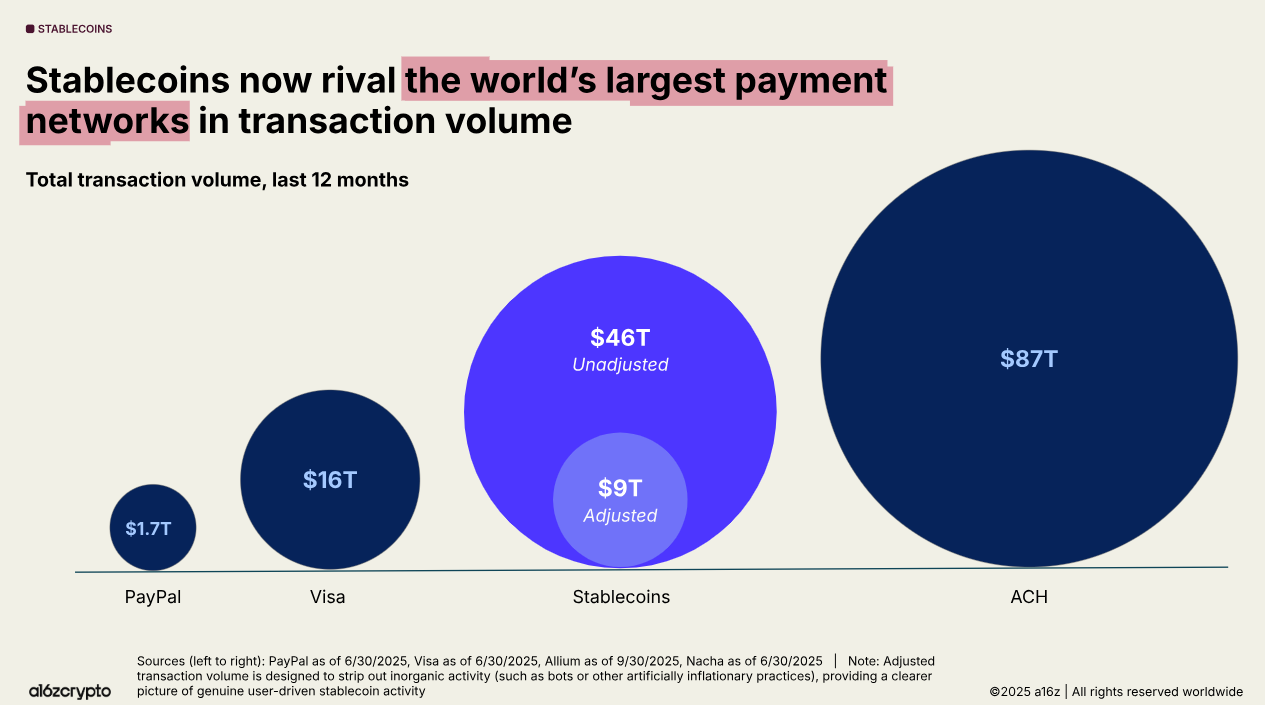
Stablecoin transaction volumes reached $9T in 2025, up 87% year‑over‑year.
Stablecoins are already settling more than five times PayPal’s throughput and over half of Visa’s global payment volume, underscoring how quickly they have moved from niche rails to system‑scale infrastructure.1
History
Early paper currency represented a claim on gold. The gold was stored safely in a vault at a bank and paper dollars were printed as claims. Instead of physically moving gold for every transaction, people exchanged paper dollars that could be redeemed for gold on demand. This made commerce faster, lighter, and more scalable.
Over time, the supply of paper money outpaced the supply of gold and in 1971 the U.S. federal government ceased convertibility of dollars into gold.
Since then, dollars have evolved to take on three forms
Paper—physical currency
Electronic—bank deposits used for payments via ACH, wires, or credit cards
Digital—stablecoins

Current State
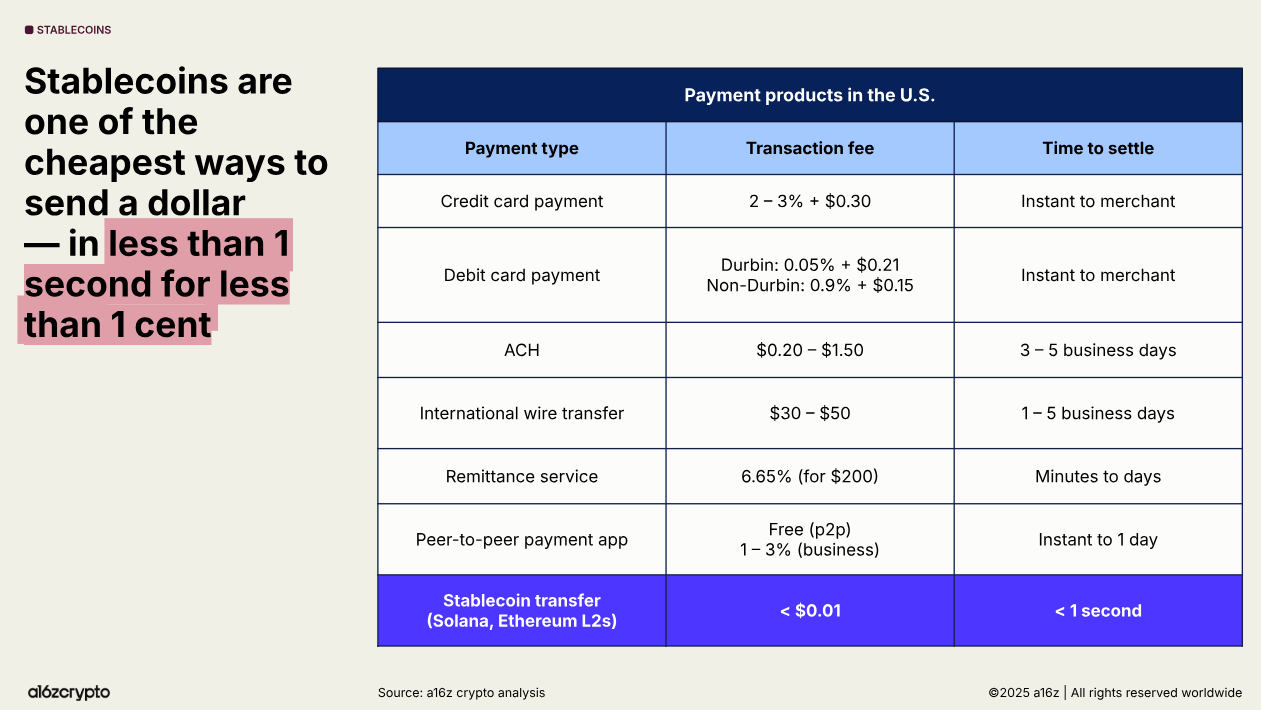
If you’ve attempted to move a large sum of money from your bank account, you may have experienced several frustrations:
You can only transfer funds during bank hours
Wire fees are expensive ($15-25 per transaction)
Banks often impose withdrawal limits that are difficult to change
Transfers can take several days to clear with no visibility
International transfers are even slower and more expensive
Large cash withdrawals trigger suspicious activity reports
Further, banks pay an average interest rate of just 0.01% to checking account depositors.

Future State
Stablecoin holders earn interest in-line with money market and high yield savings rates. The interest is generated from the underlying reserves which are invested in T-bills (the regulation requiring this is discussed below). The underlying risk is the full faith and credit of the U.S. federal government, rather than any individual bank balance sheet or FDIC insurance.
Further, stablecoins streamline dollar transactions by operating on blockchain networks, eliminating intermediaries and settlement delays. Transfers are near-instant and can occur 24/7 across borders with minimal fees.
By contrast to our example above, stablecoin holders can transfer any sum of money during a weekend with no need for a bank, near instant settlement, transparent visibility on a public blockchain, and average fees of less than one penny.
Legislation
The GENIUS Act (Guiding and Establishing National Innovation for U.S. Stablecoins) was signed into law on July 18, 2025, establishing the first federal regulatory framework for stablecoins in the United States.
With the passage of the GENIUS Act, stablecoins are now legally recognized and subject to a clear federal regulatory framework.
Sitting Treasury Secretary Scott Bessent said the $300B stablecoin market could grow tenfold to $3T by the end of the decade, driven by innovation and regulatory clarity. I’ll take the over.
The U.S. government views stablecoins favorably for two primary reasons:
Network Effects
Stablecoins extend the network effects of the U.S. dollar. This new infrastructure allows anyone to save and spend in dollars without the need for a bank. Offshore dollars held outside the U.S. banking system can now easily be tracked and the underlying reserves can finance the U.S. government. Which brings me to my second point…
Government Financing
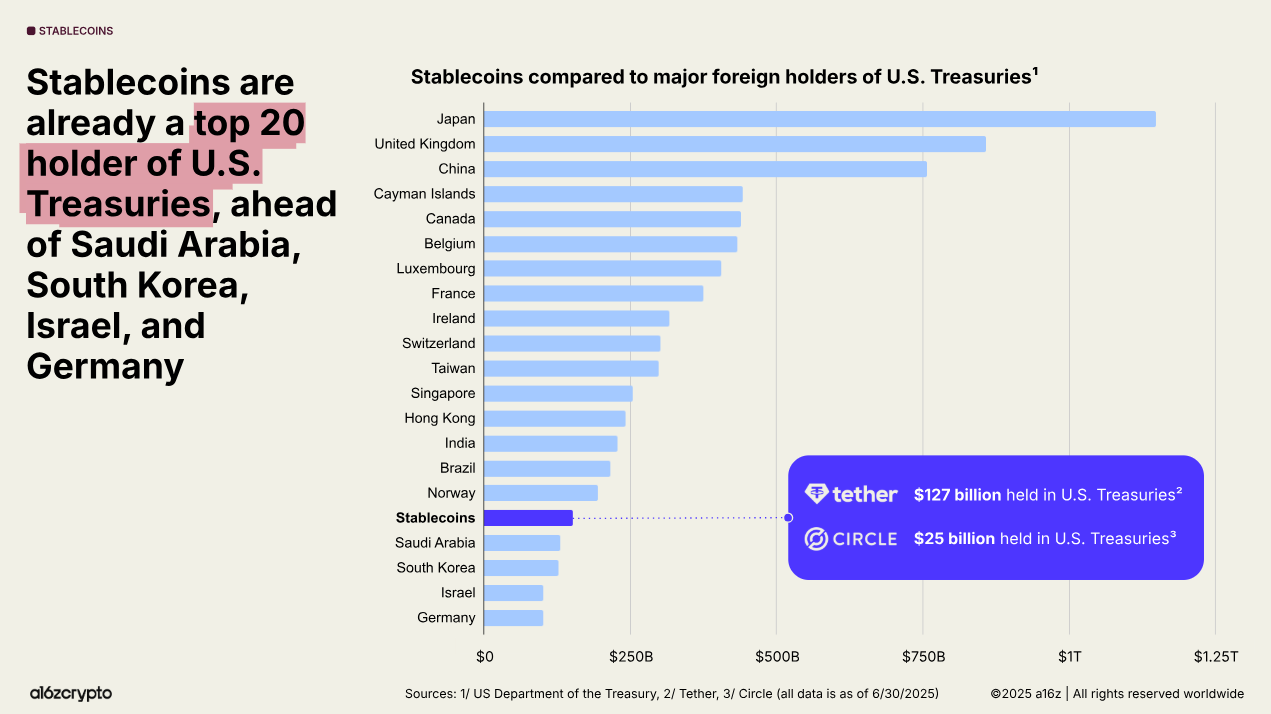
Stablecoin issuers hold dollar reserves in short-term Treasury securities, creating a reliable source of demand for U.S. government debt.
Investment Opportunities
Legal clarity enhances the stablecoin investment thesis.
Let’s briefly examine two ways to invest in the opportunity:
Circle (NYSE: CRCL)
The two largest stablecoin issuers are Tether and Circle.
Tether is a private company but Circle completed its IPO in 2025.
Nearly 100% of Circle’s revenues come from interest on reserves—yield generated from dollars on deposit that back their native stablecoin USDC.
This makes Circle vulnerable to profitability impacts from rate cuts.
Unless Circle diversifies its revenue streams, the business is not resilient enough for me to invest, despite my bullish outlook on stablecoins.
Ethereum (ETH)
Over half of all stablecoin transactions occur on the Ethereum blockchain.
Stablecoin transactions generate fees that drive value for Ethereum investors (approx. $250 million in 2025).
As stablecoins grow in use, fees should increase as well.
Additional future use cases for Ethereum discussed in my recent article add upside potential beyond stablecoins.
Conclusion
We can reasonably conclude the implications for key stakeholders:
Users—benefit from faster, cheaper transactions
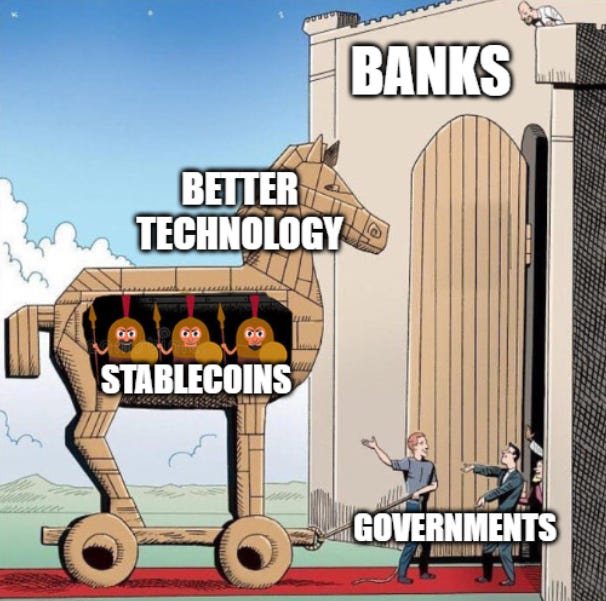
Governments—benefit through extended currency reach and debt financing
Ethereum—benefits from increased use, transaction fees, and network effects
Banks—lose deposits and market share in payments
Widespread adoption of stablecoins is inevitable.
Superior technologies rarely take long to replace incumbents.

Thanks for reading! Share this post:
https://a16zcrypto.com/posts/article/state-of-crypto-report-2025/
Comments
Nothing yet. Say the first thing.
Sign in to join the conversation.