
Summary:
The 30-year Treasury yield just broke out to levels last seen in 2007
Higher rates will hurt less than conventional wisdom suggests
The driver is issuance, not inflation
Gold should continue to outperform government bonds
[3 minute read]
The Breakout
Last week, the 30-year U.S. government bond yield broke out to 5.2%, a 20-year high.
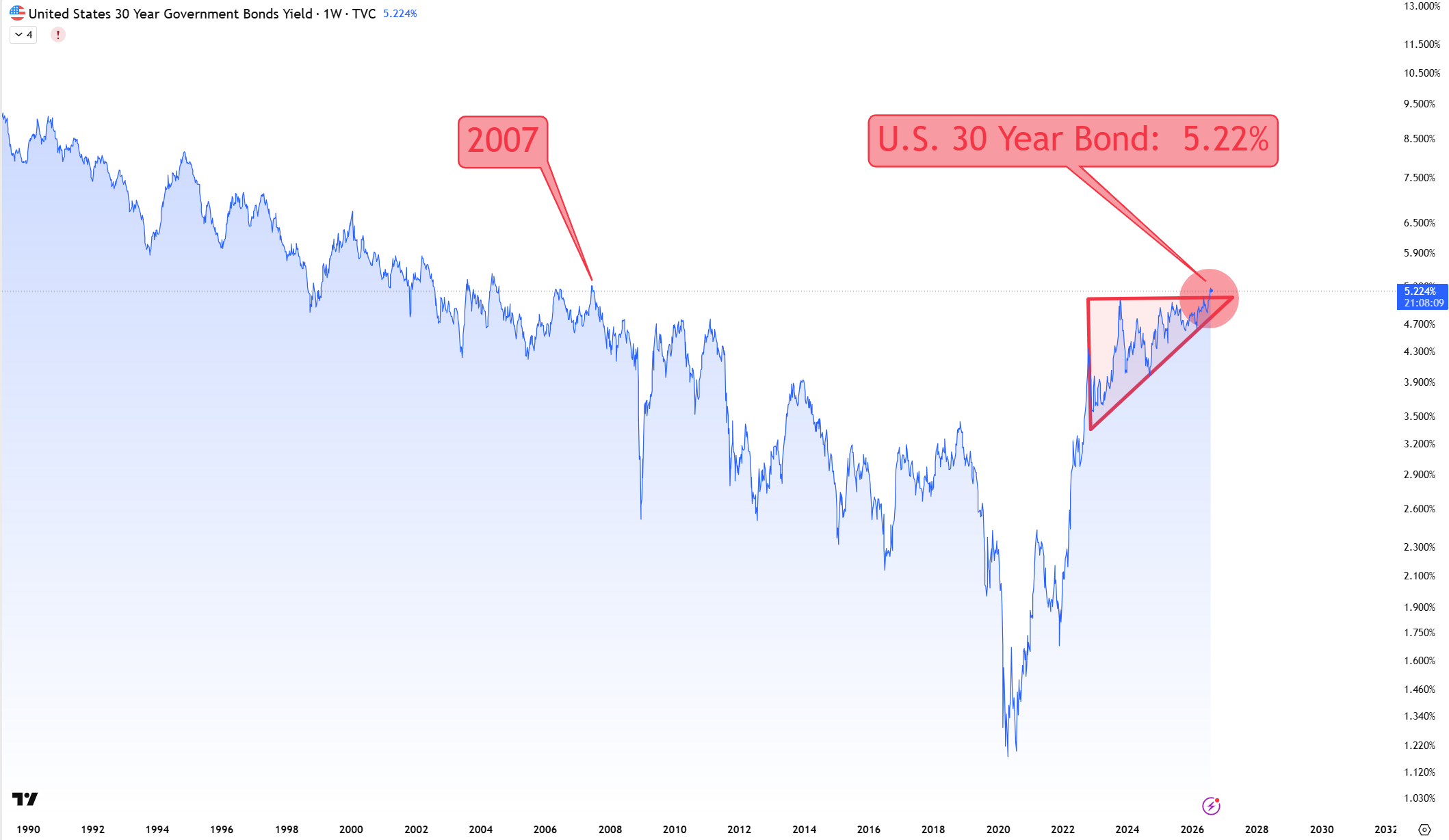
The pattern suggests the 30-year could be heading above 7%.
Conventional wisdom says rates that high would crush the economy and the equity market.
I disagree.
Who Actually Owes the Money
Higher rates hurt borrowers.
Who is the borrower?
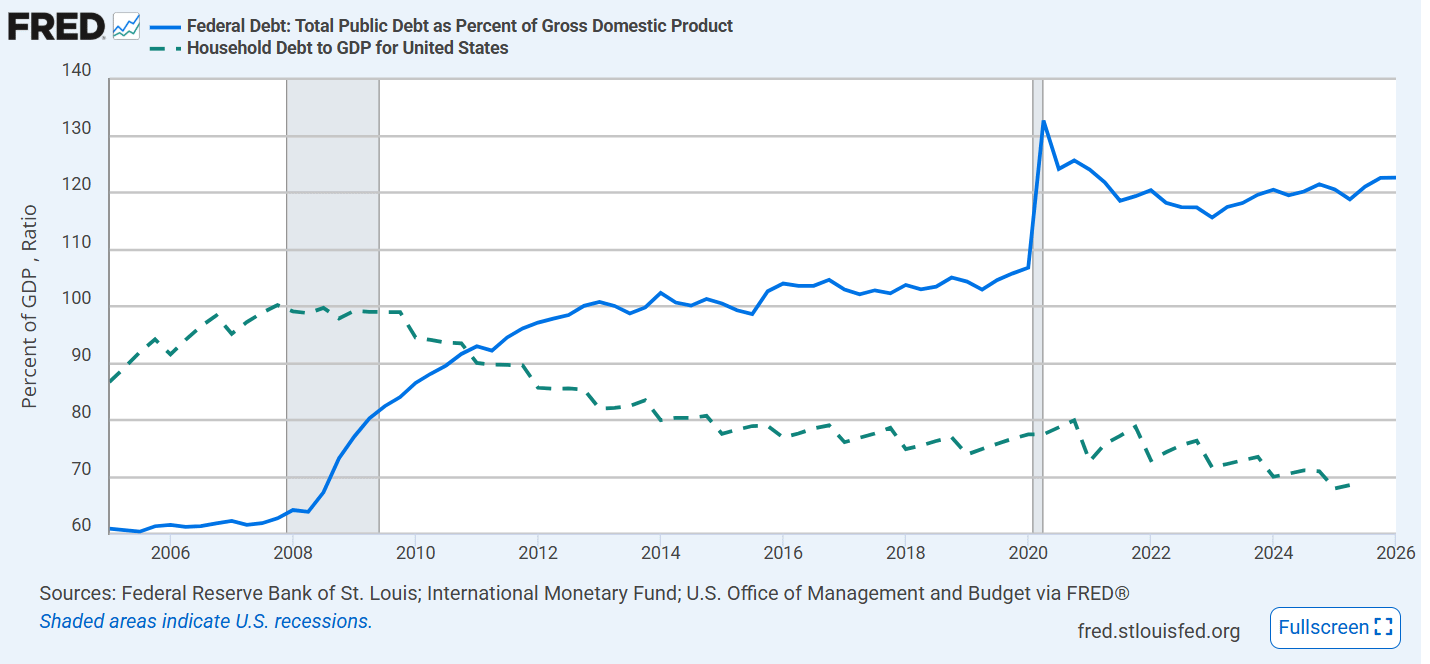
Since 2008, household debt has fallen from nearly 100% of GDP to about 70% (green dashed line in the chart below).
Over the same period, federal debt has roughly doubled to over 120% of GDP (blue line).
Rate sensitive sectors like housing will continue to struggle.
But overall, the private sector has deleveraged.
Higher rates are a bigger problem for the government.
The Reflexive Loop
Federal debt is approaching $40 trillion.
Interest costs will reach roughly $1 trillion this fiscal year, about 14% of all federal spending.
Higher rates increase the deficit.
Bigger deficits require more bond issuance.
More issuance pushes rates higher.
The loop feeds itself.
This is why I believe rates are rising on supply, not inflation.
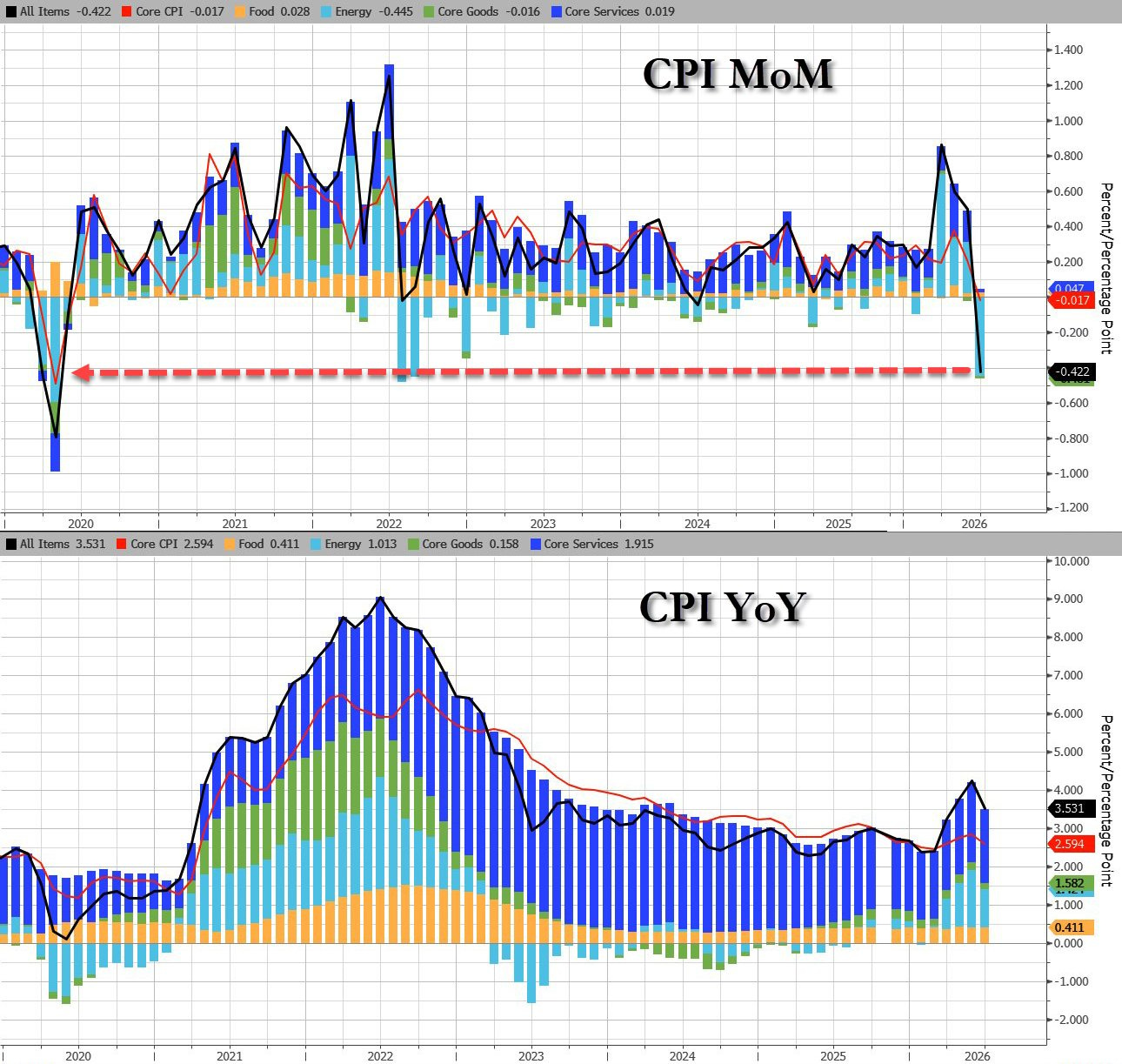
I made the case in April that inflation isn’t coming back.
Nothing since has changed my view, and the most recent CPI print was the largest monthly decline since the COVID crash.
Stimulus
That $1 trillion of federal interest is income to someone.
It flows to net cash positive corporates and households, and from there into the economy and asset markets.
Government interest payments have quietly become stimulus, and higher rates are now stimulative for some pockets of the private sector.
Who Buys the Bonds?
If issuance is accelerating, someone has to absorb it.
The traditional buyers are stepping back.
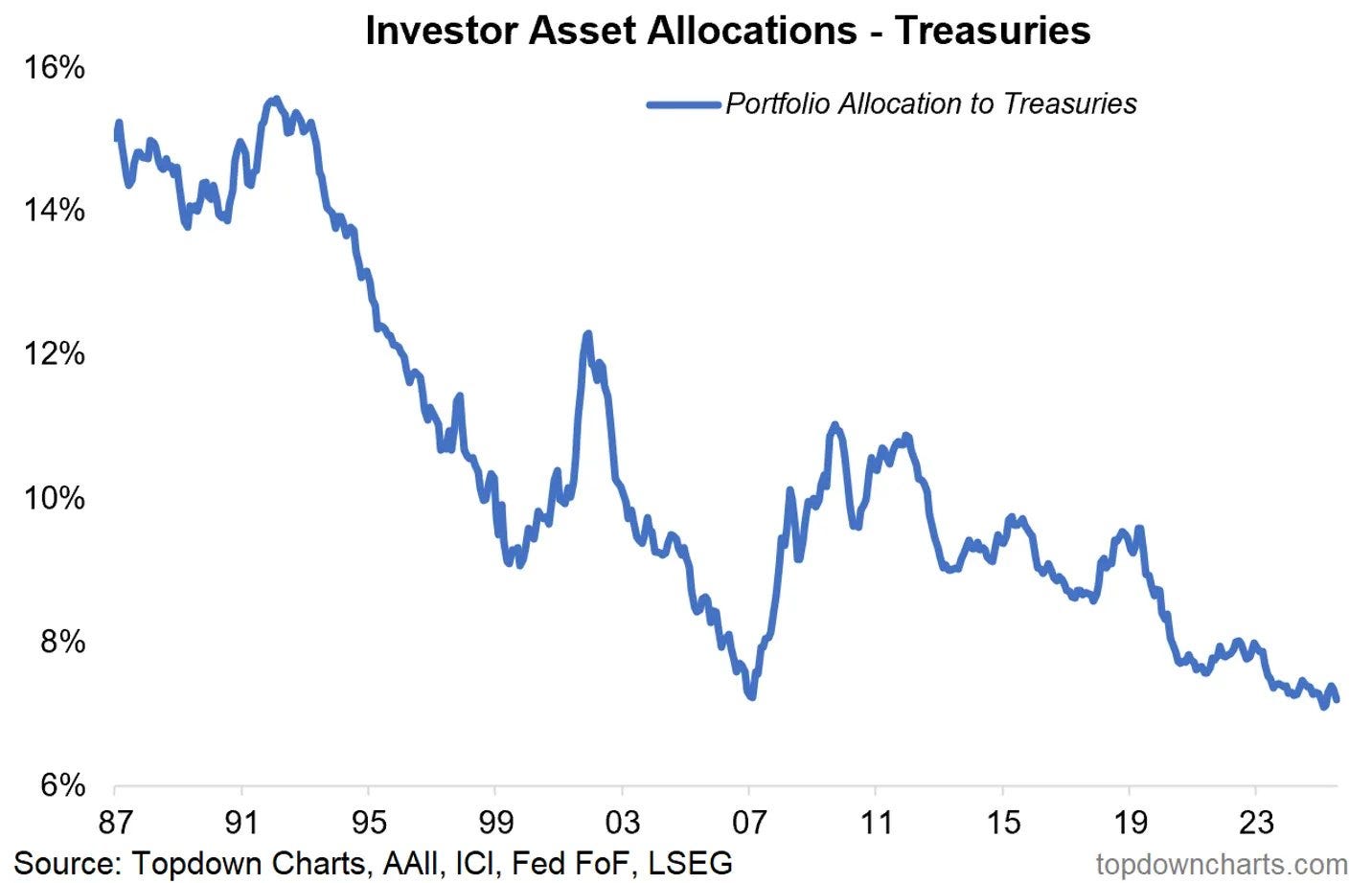
Individual investor allocations to Treasuries sits near multi-decade lows.
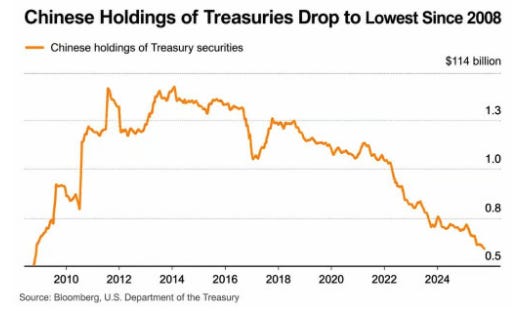
China’s Treasury holdings have fallen to the lowest level since 2008.
Every major government is competing for the same pool of bond buyers at the same time.
The Trade
If no natural buyer emerges, yields drift higher and bond prices drift lower.
Meanwhile, one buyer has made its choice.
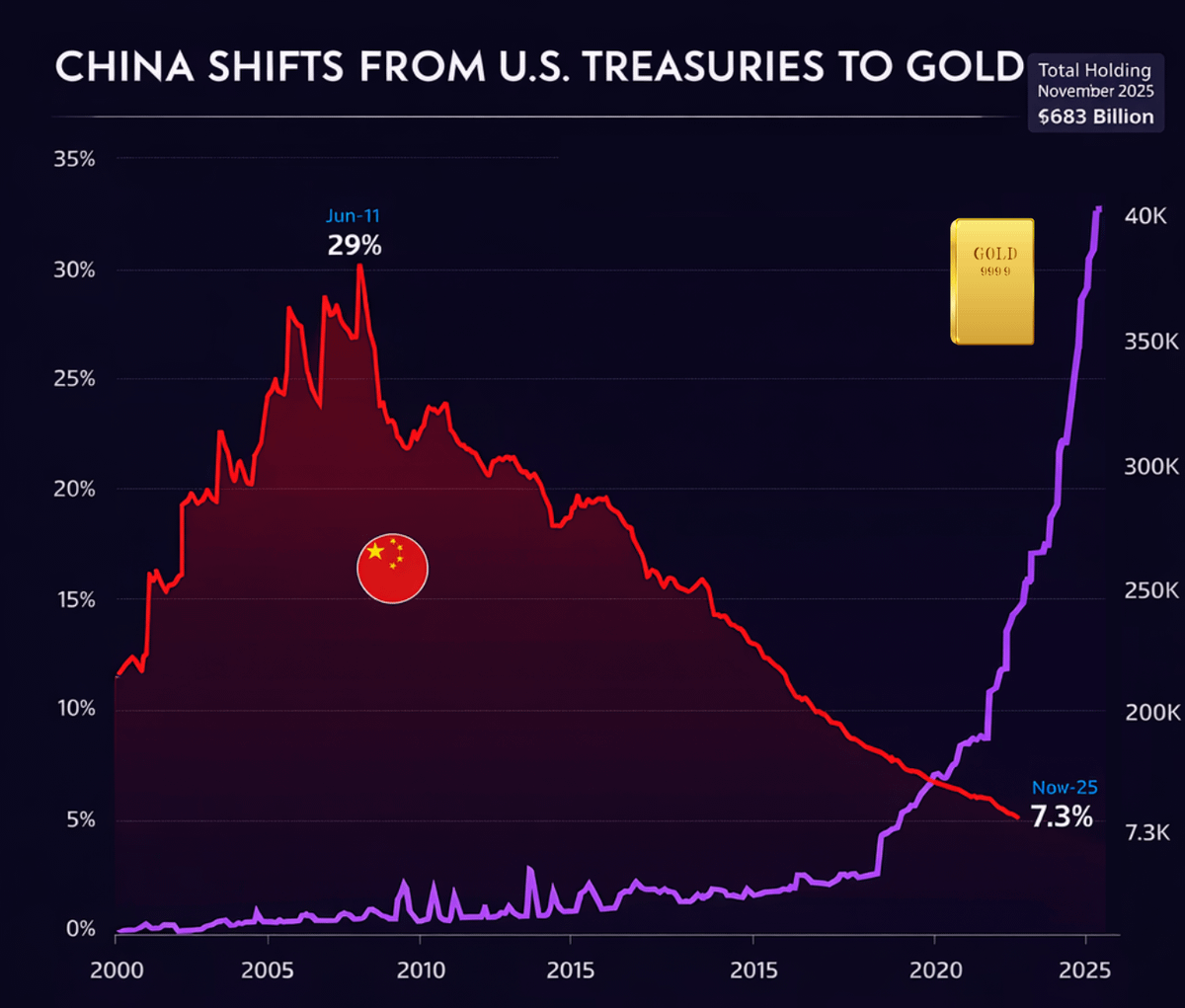
China has been swapping Treasuries for gold for a decade.
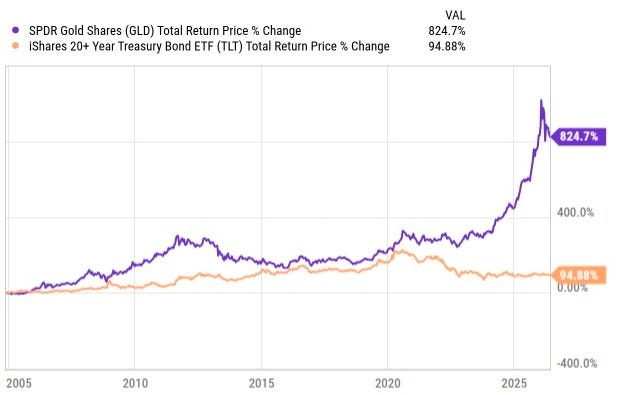
Over the last two decades, gold has returned roughly 825% while long term Treasury Bonds have returned just 95%.
And for those who think the stock market is the obvious alternative, some context.
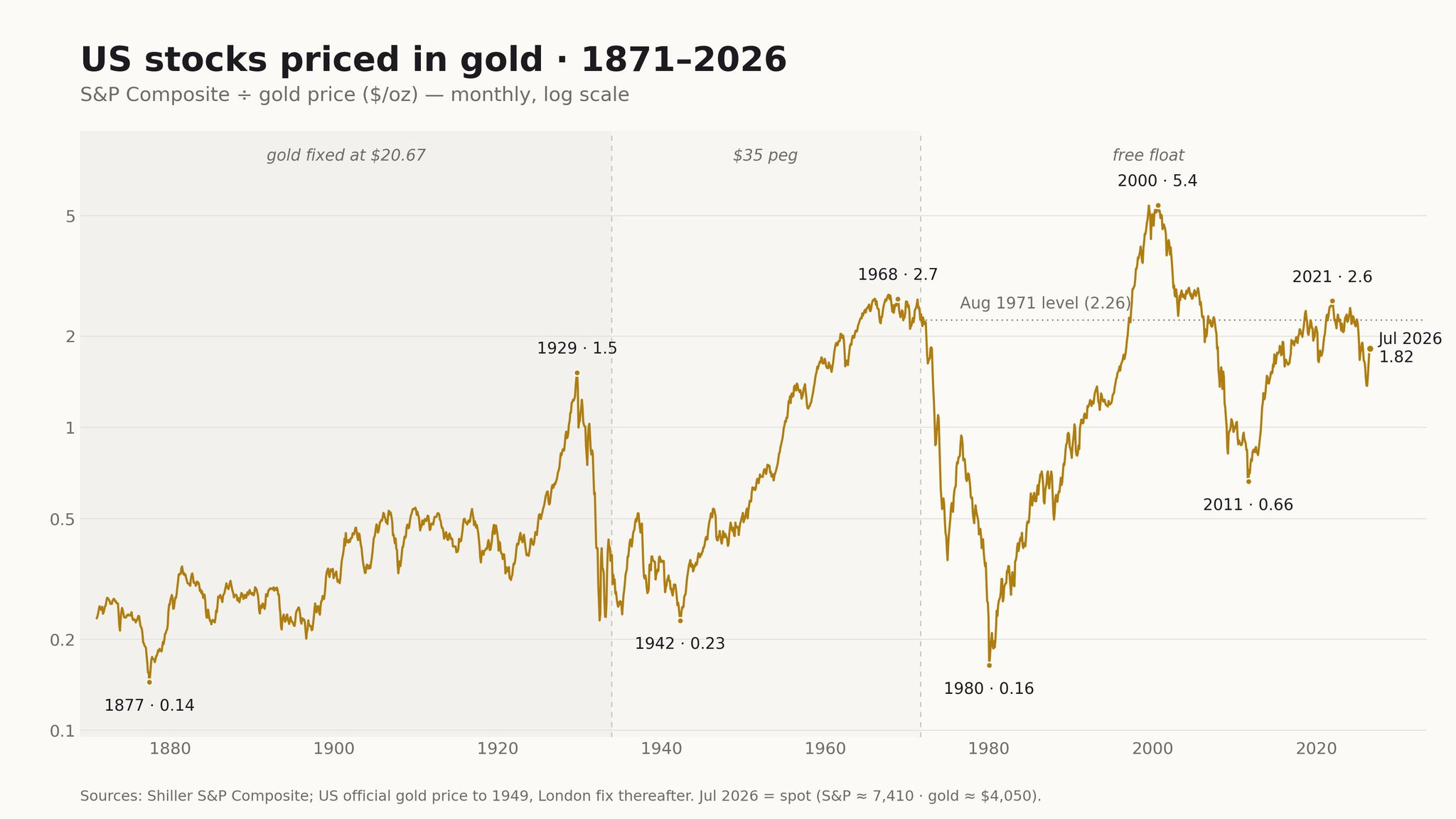
Priced in gold, the S&P 500 trades at the same level it did in 1961.
Conclusion
Interest rates are breaking out and I expect them to keep climbing.
Conventional wisdom says that ends the bull market.
But the pain from higher rates lands on the borrower, and this cycle the borrower is the government.
A deleveraged private sector can absorb higher rates.
My conclusion is to stay long equities (priced in dollars), avoid the long bond, and own gold.
When taking issuance into consideration, bonds are no longer a risk free asset.
The next decade belongs to the asset nobody can issue.
Share my work here:
Comments
Nothing yet. Say the first thing.
Sign in to join the conversation.